Yakut Horses
 Beyond the polar circle
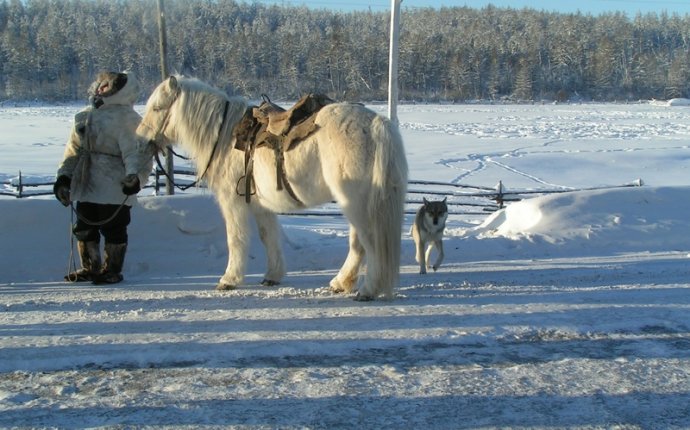
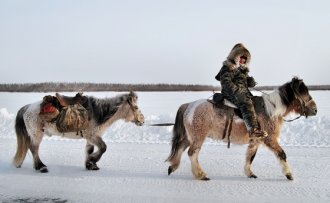
The horses of the Yakutian species (Jakutsky, syringes or ah of ata) live in the open air for a year round in extreme conditions in the north. The breeding unit includes the Republic of Saha (Yakutia) and even goes far beyond the Polar Circle, into the forest area where the variations in absolute annual temperatures range from +38 to -70 C (more than 100 °C!) and winter lasts eight months per year. Contemporary scientific data indicate that the fish are one of the oldest species in the world. Researchers suggest that a modern Yakut horse is a direct descendant of primitive, oldest house horses who have fallen into this severe edge from the center of homelessness - Mesopotamia and small Asia. The immune and genetic markers showed a high genetic similarity of the horses of the Japanese species with non-parno-experienced central-Asian origin, the horses of the Akhaltecian, Arab, Kazakh and Kyrgyz species.
Three.
In Yakuchi, three types of Japanese horses were formed under the influence of the natural and climatic conditions of specific areas and by intersection with other species. This is how the northern original type of Yakutian horses emerged (medne-collar, upper-law horse), a smaller Southern type and a Southern large type.
In one version, the northern type was created by the crossing of horses from the south (from Pribaykalya) from the wild late-time wild horse. A friend of the hypothesis, a Japanese horse is a direct descendant of a wild late-story horse. The Southern large type is represented by the descendants of Suntar, Megin and Legmin horses. This type was derived from the mixing of blood, the cross-section of Jacquet horses with redheads and partly with heavy-duty species, as well as from improved feeding and a more careful approach to breeding. The characteristic feature of the southern large type of horse is a longer body and a relatively high idling, weighing 430-470 kg. In the creation of a new, megecacaca species, the method used was the blood of horses with black and Russian heavy-duty species. The horses of this type are mainly scattered in the stepán Vasiliev coneszac in the Nurebin region, the Republic of Saha. Their weight can reach 600 kg or more.


